Website Governance During a Nonprofit Leadership Transition — Protecting Institutional Credibility When Everything Changes
How to govern your nonprofit website during an Executive Director or CEO transition — covering credential security, content accuracy, messaging continuity, and what the incoming leader needs from the site.

Summary
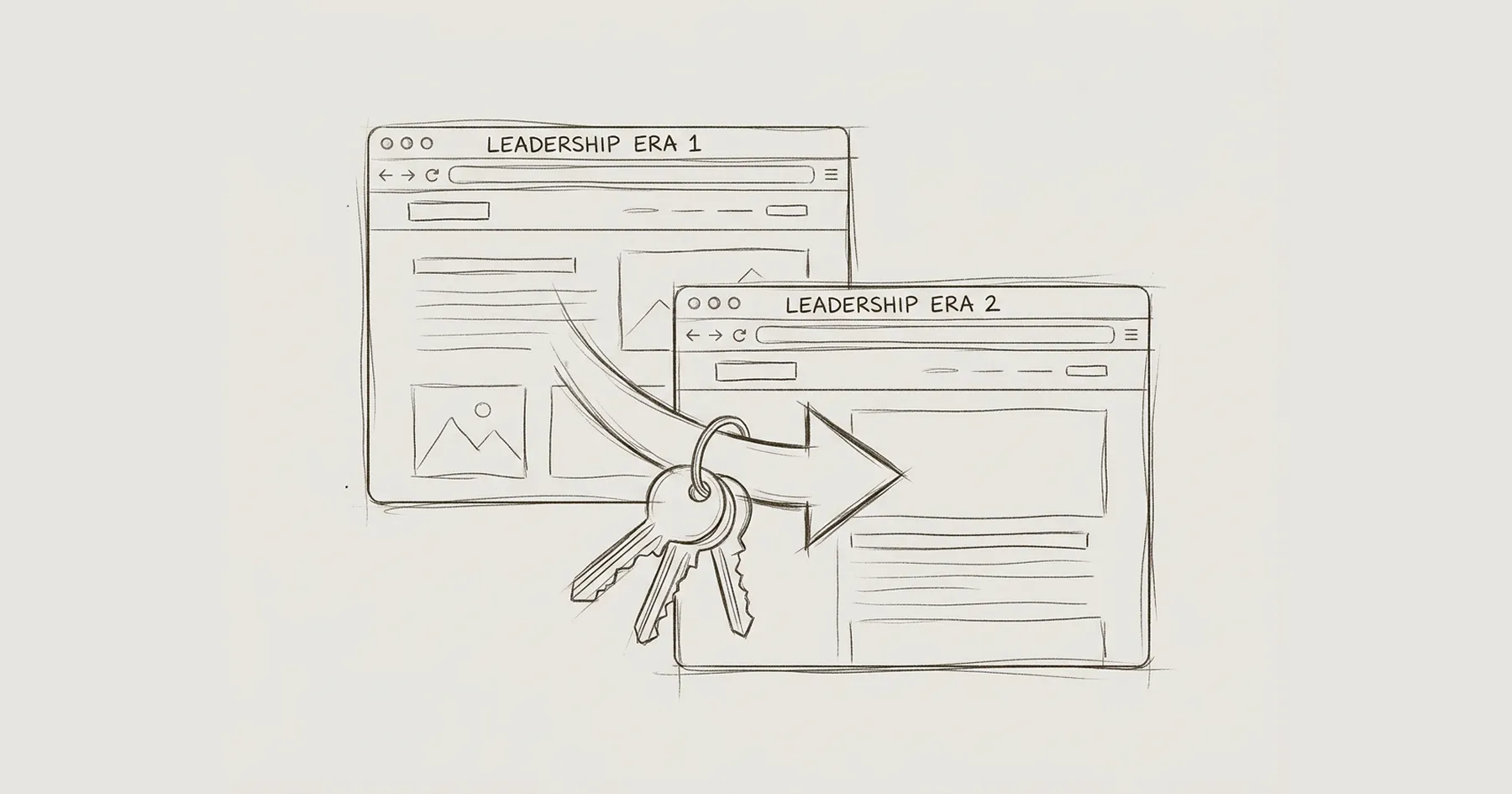
Leadership transitions are among the highest-risk governance moments for nonprofit websites. When an Executive Director leaves — whether planned or sudden, positive or contentious — the website immediately requires attention on multiple dimensions simultaneously: content about the departing leader must be managed sensitively and promptly, the incoming leader's credentials need to be reflected accurately once confirmed, messaging continuity must be maintained through a period of institutional uncertainty, and governance documents referenced on the website must reflect the actual governance arrangements in place during the transition.
Most organisations discover they are not adequately prepared for this. The outgoing Executive Director is the named contact on multiple pages. Their photograph and biography represent the organisation's leadership to funders and donors. Their commitments and statements are cited in content across the site. Managing the transition from a website perspective requires decisions — some with political dimensions — that are easier and more effective when made through a governance process rather than ad hoc under pressure.
This post covers the governance framework for managing a nonprofit website through a leadership transition: the preparatory steps that should be taken before any leadership change occurs, the specific content categories that require immediate attention when a transition is confirmed, how to communicate the transition on the website in a way that maintains institutional continuity, how to manage the digital credentials and access rights associated with the departing leader's role, and what the new leader needs from the website in their first weeks in post to establish their credibility with the stakeholder groups that will form an early impression of their leadership.
Website Governance: Leadership Transitions
When an Executive Director leaves, the website becomes an institutional liability. Outdated messaging, broken accountability chains, and orphaned content create credibility risk precisely when the organisation is most visible.
Leadership transitions are one of the most common triggers I encounter in initial conversations with Communications Directors. The outgoing leader’s biography is still on the About page. The strategic messaging reflects priorities that no longer apply. The website credentials are held by someone who has left. And the Board, rightly, is asking whether the organisation’s public-facing digital presence reflects its current reality.
Here is how to govern the website through a leadership transition — before, during, and after.
Why Transitions Expose Website Governance Failures
Most nonprofit websites operate on accumulated institutional knowledge. The Communications Director knows which pages are outdated. The departing ED knows why certain messaging choices were made. The developer who built the site five years ago has the only record of how the CMS is structured.
None of this is documented. When any of these people leave, the knowledge leaves with them. The transition exposes governance gaps that were invisible during stable periods — because the people who knew the answers were still in the room.
The most common failures are: credentials held by individuals rather than the organisation, content maintained by departed staff with no handover, vendor relationships that exist informally rather than contractually, and messaging that reflects the personal priorities of the outgoing leader rather than the institutional mission.
Phase 1: Before the Departure
As soon as a leadership transition is confirmed, the Communications Director (or whoever manages the website) should complete three immediate actions.
Secure all credentials. Audit every platform credential associated with the website: CMS login, hosting account, domain registrar, analytics, Google Tag Manager, CookieYes, donation platform, email marketing, social media linked from the site. Ensure the organisation — not the departing individual — holds admin access to every one of these. If the outgoing ED is the sole admin on any platform, transfer ownership before they leave. This is the single most important governance action in a transition.
Freeze non-essential content changes. During the transition period, limit website changes to factual corrections and compliance updates. Do not launch new campaign pages, redesign sections, or publish messaging that the incoming leader may want to change. The website should be stable and accurate, not evolving in a direction the new leader has not endorsed.
Audit content accuracy on key pages. Review the homepage, About page, leadership team page, programme descriptions, and governance section. Remove the departing leader’s biography if they have left. Update any messaging that is attributed to or dependent on the outgoing leader. Ensure the annual report, trustee listing, and contact information are current.
Phase 2: During the Vacancy
If there is a gap between the departure and the new appointment, the website needs to reflect this honestly.
Update the leadership page. Remove the departed leader. If an interim or acting leader is in place, add them with their correct title and role. Do not leave a departed Executive Director on the website — funders and journalists will notice, and it signals that nobody is governing the site.
Review the homepage messaging. If the homepage includes quotes, strategic framing, or priority statements from the departed leader, assess whether they still represent the organisation’s position. If they are institutional positions endorsed by the Board, they can stay. If they are personal to the leader, remove or replace them with institutional language.
Maintain governance documentation. The annual report, accounts, safeguarding policy, privacy policy, and accessibility statement should remain visible and current regardless of who leads the organisation. These are institutional obligations, not leadership-dependent content.
Brief the Board on website governance status. Trustees should know: are credentials secure, is content accurate, is the site compliant, and what is the plan for when the new leader arrives? A short briefing note demonstrates that the digital estate is being governed during the transition.
Phase 3: Onboarding the New Leader
When the new Executive Director or CEO arrives, the website should be one of the first governance topics they are briefed on — not as a communications tool, but as institutional infrastructure.
Provide a website governance briefing. Cover: what the site contains, who manages it, what platform it runs on, who holds credentials, what the current compliance status is (accessibility, GDPR), and what stakeholders the site currently serves. This briefing should take 30 minutes and should be documented.
Align messaging before making changes. The new leader will want to put their stamp on the website. This is natural and appropriate. But messaging changes should follow a governance process — the Communications Director proposes updates, the new leader approves, and changes are implemented systematically. Avoid the pattern where the new ED sends a flurry of ad hoc website change requests in their first week without understanding the current architecture.
Review the stakeholder framework. Does the website still prioritise the right stakeholders? A new leader may bring different strategic priorities that change which audiences matter most. The stakeholder salience framework should be revisited as part of the new leader’s strategic planning, with website architecture implications considered explicitly.
The Credential Problem
Credential security deserves its own section because it is consistently the most neglected and most consequential governance failure in leadership transitions.
In the majority of nonprofit website audits I conduct, at least one critical platform credential is held by a former employee or a vendor rather than the organisation. Domain registrar access is the most dangerous — if the organisation does not control its domain, it does not control its web presence. CMS admin access, analytics, and donation platform access follow close behind.
The fix is a credential register: a documented list of every platform, who holds access, what role they have, and how access transfers when someone leaves. This should be part of your website governance policy and reviewed annually. See How to Create a Website Governance Policy for the full framework.
When a Transition Signals a Bigger Problem
Sometimes the leadership transition reveals that the website’s problems predate the departure. The site was already outdated, the content was already inaccurate, the accessibility was already non-compliant. The transition simply made these failures visible.
In these cases, the incoming leader is inheriting not just a leadership vacancy but a website governance deficit. The right response is not a rushed redesign in the first 90 days. It is a structured diagnostic that establishes what the site needs, what it currently does, and what the gap is — so the new leader can make an informed decision about investment.
The Blueprint Audit is designed for exactly this situation. It gives the incoming leader and the Board a clear picture of the website’s condition, the stakeholders it should serve, and the specific actions required — before any commitment to a rebuild or redesign.
For the governance framework that survives personnel changes, see Why Your NGO Website Is a Governance Problem. For how stakeholder priorities should inform website decisions, see Nonprofit Website Stakeholder Mapping.
Frequently Asked Questions
Q1: What should happen to the nonprofit website when the Executive Director leaves?
Secure all platform credentials immediately, update the leadership page, freeze non-essential content changes, audit key pages for accuracy, and brief the Board on website governance status. The priority is preventing credential loss and ensuring the site accurately reflects the organisation’s current state.
Q2: Who should control website credentials during a leadership transition?
The organisation, not any individual. All platform access (domain registrar, CMS, analytics, donation platform) should be transferred to organisational accounts before the departing leader leaves. A credential register documenting all access should be maintained as part of website governance.
Q3: Should we redesign the website when a new Executive Director starts?
Not immediately. A rushed redesign in the first 90 days risks building for assumptions rather than evidence. Start with a governance briefing for the new leader, then conduct a structured diagnostic to establish what changes are actually needed before committing resources.
Q4: How do I update the website messaging after a leadership change?
Review messaging systematically rather than ad hoc. Distinguish between institutional messaging (endorsed by the Board, should remain) and personal messaging (specific to the departed leader, should be reviewed). Propose updates through the Communications Director for the new leader’s approval.
Q5: What website pages need immediate attention during a leadership transition?
Homepage (check for leader-specific messaging), About and leadership page (update biographies), programme descriptions (verify accuracy), governance section (ensure annual report and trustee information are current), and contact page (verify details are correct).
Q6: How do I brief the Board on website status during a transition?
Provide a short governance briefing covering: credential security status, content accuracy on key pages, compliance status (accessibility, GDPR), any outstanding risks, and the plan for onboarding the new leader to website governance. This demonstrates the digital estate is being governed.
Q7: What happens if the departing leader holds the only domain registrar access?
This is the most critical credential risk. If the organisation does not control its domain, it does not control its web presence. Transfer domain ownership to an organisational account before the departure. If the person has already left, contact the registrar with organisational documentation to reclaim access.
Q8: Should the interim leader be listed on the website?
Yes. If an interim or acting leader is in place, they should appear on the leadership page with their correct title. A vacancy with no visible leadership signals governance instability to funders, partners, and regulators reviewing the site.
Q9: How long after a new leader starts should the website be updated?
Leadership page and biography should be updated within the first week. Messaging and strategic content should be reviewed within the first month. Any structural changes to the site should follow a proper governance process with the new leader’s input, typically within the first quarter.
Q10: What is a website governance briefing for a new Executive Director?
A 30-minute briefing covering: what the site contains, who manages it, what platform it runs on, who holds credentials, compliance status, which stakeholders the site serves, and any outstanding issues. This should be documented and forms part of the new leader’s governance induction.
Is this familiar?
Most nonprofit websites don't fail at launch. They fail quietly, over time.
The governance gaps, the stakeholder confusion, the Board that's stopped referring people to the site — these don't announce themselves. See what the difference looks like when it's built correctly from the start.
Eric Phung has 7 years of Webflow development experience, having built 100+ websites across industries including SaaS, e-commerce, professional services, and nonprofits. He specialises in nonprofit website migrations using the Lumos accessibility framework (v2.2.0+) with a focus on editorial independence and WCAG AA compliance. Current clients include WHO Foundation, Do Good Daniels Family Foundation, and Territorio de Zaguates. Based in Manchester, UK, Eric focuses exclusively on helping established nonprofits migrate from WordPress and Wix to maintainable Webflow infrastructure.
Ready to understand your current situation clearly?
The Blueprint Audit is where we start.
A two-to-three week diagnostic that maps your stakeholder needs, audits your current site, and gives you a clear strategic brief before any implementation commitment is made. £2,500. No obligations beyond the audit itself.
In case you missed it
Explore more

Nonprofit Website Audit Checklist: What to Review Before a Rebuild

What Is Website Governance for Nonprofits? A Complete Guide

Webflow vs WordPress for Charities: A Governance-First Comparison
Join our newsletter
Subscribe to my newsletter to receive latest news & updates