






Charity and nonprofit website design for established NGOs
Built for the moment someone looks closely.

I build and look after websites for established NGOs and nonprofits. When a funder runs due diligence, a journalist checks a claim, or a trustee opens the annual report link, everything holds. And the person responsible for the site stops carrying it alone.
Trusted by international NGOs. Reviewed on Clutch and Trustpilot.


You already know the problem. You live with it.
You are the communications director, the de facto webmaster, the person the board emails when something on the site is wrong, and the one who fields the question when a funder cannot find the safeguarding policy. When the site breaks in the middle of a campaign, that lands on you too. None of this is in your job description. All of it is your responsibility. That is the weight I take on.
How you work with me
Every engagement begins with a diagnosis, then follows the build route that fits your organisation.
The Blueprint Audit
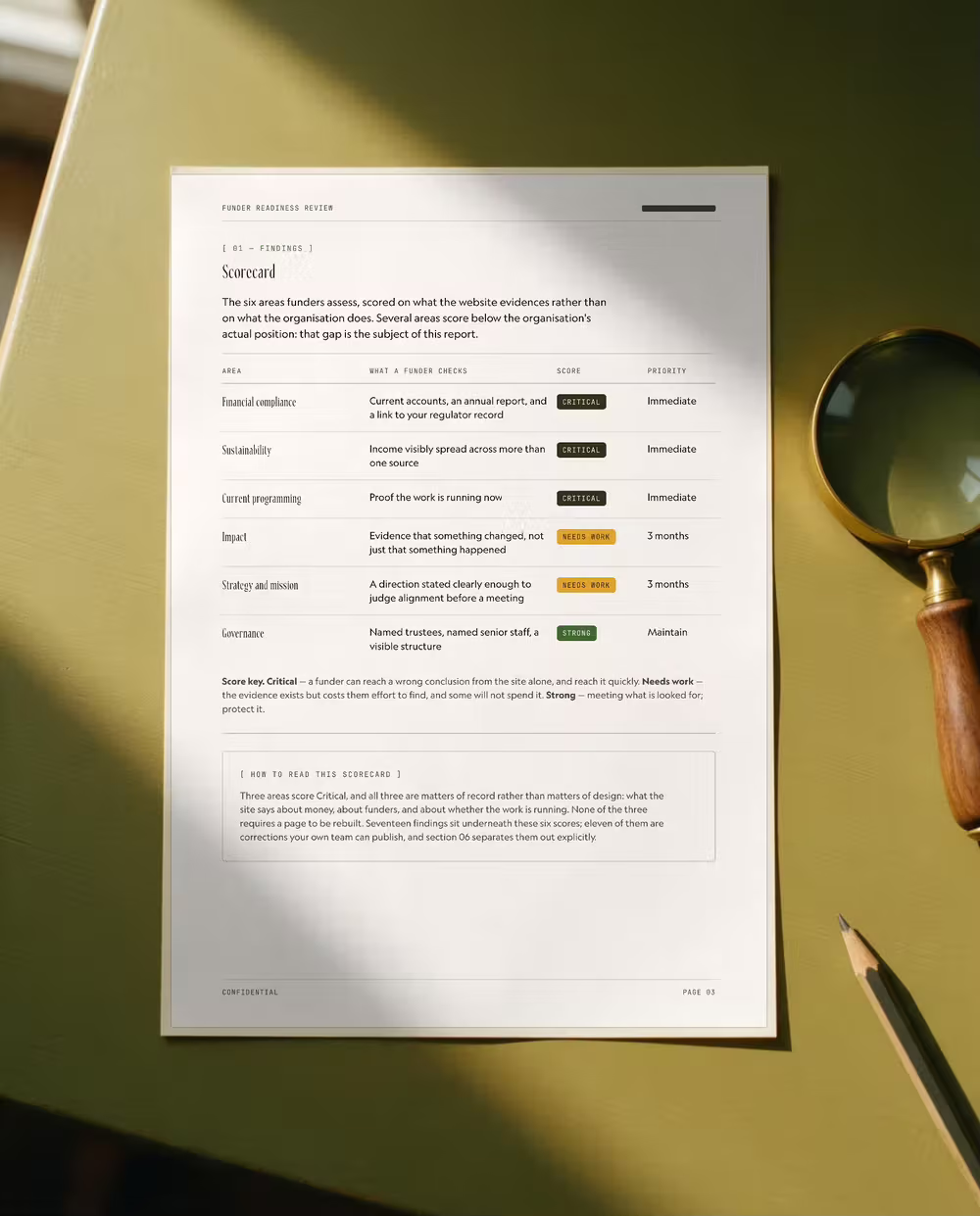
A governance diagnostic that maps your stakeholders, audits your accessibility, credibility, and search and AI visibility, and identifies the governance gaps a rebuild alone will not fix. You leave with a Board-ready roadmap.
£2,500 · 2 to 3 weeks · stands alone, no obligation to proceed
Then, to build, one of two structures
The Monthly Partnership
Ongoing Webflow design and development. The build is the first phase, then the site evolves with your work. Rolling, cancel anytime.
Implementation
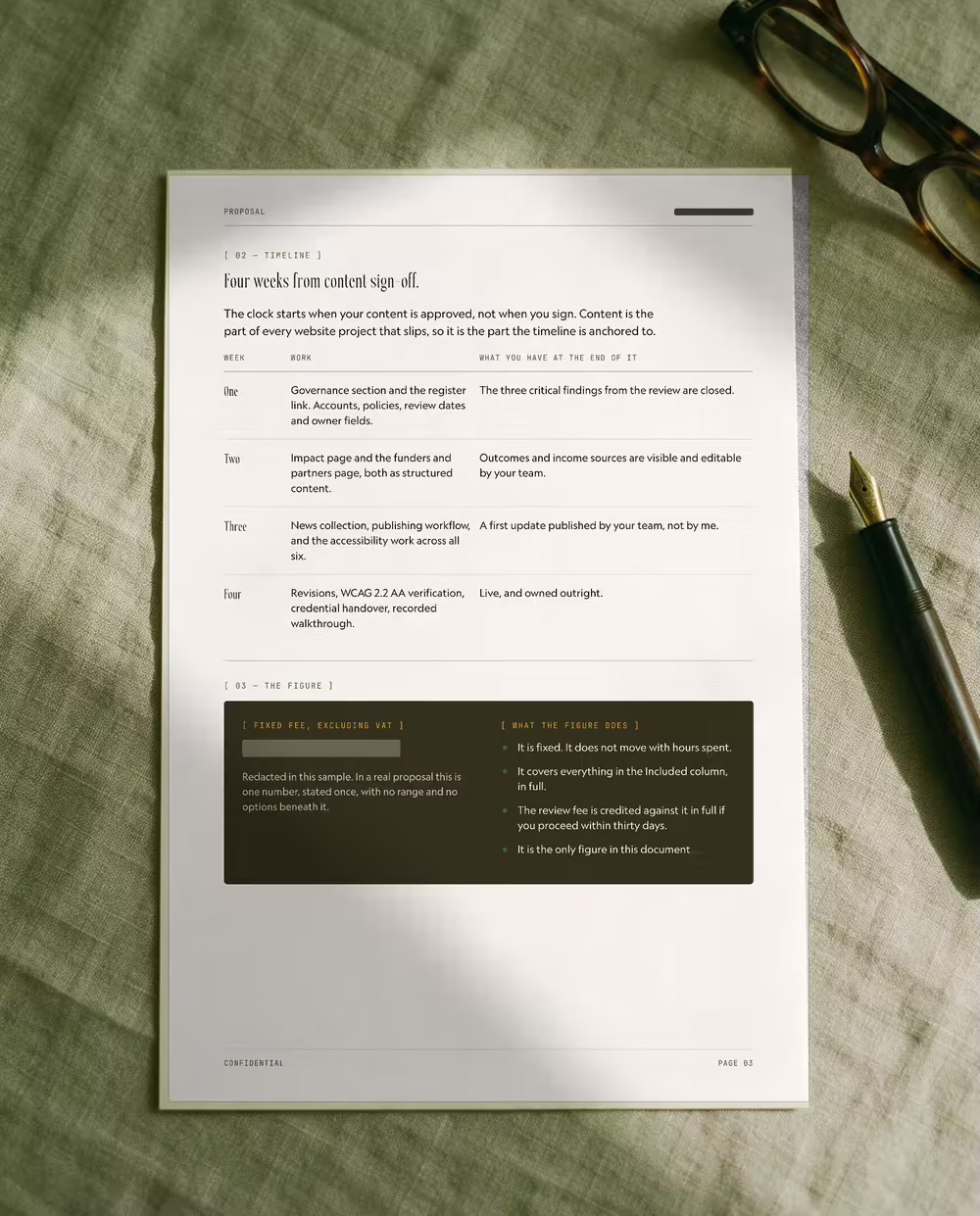
A fixed-scope Webflow rebuild delivered as a defined project, on a fixed timeline and price. Usually for a tender or grant.
Not sure which build route fits? The Blueprint Audit tells you plainly, and the recommendation is based on your organisation, not on what I would prefer to build.
Selected Work
Governance-grade infrastructure for organisations under scrutiny.
WHO Foundation
Organic traffic tripled post-migration. The team publishes and builds donation pages independently.
Territorio de Zaguates
International fundraising infrastructure across borders, run by a small team.
Do Good Daniels
Wix to Webflow migration. Retained for three follow-on projects.
What changes when your website becomes infrastructure
The 2026 Give.org Donor Trust Report found that donors who research a charity before giving are influenced more by the charity's own website (54%) than by third party watchdog sites (39%). Your website is the evidence.
Funder confidence
Funders find the governance documents and evidence they expect, and the site reflects your actual standing.
Campaigns in days, not months
New campaigns and programme pages go live quickly, without waiting for a rebuild.
Your team stops waiting
Content updates happen without a developer in the way, so the site keeps pace with your work.
The rebuild cycle ends
The website is maintained as infrastructure, so you stop rebuilding it from scratch every few years.
"Working with Eric on the re-platforming of our site has been an absolute joy. He has taken what we thought would be a complex process and made it easy, seamless and professional. Even when our brief was to 'lift and shift' our site to Webflow, Eric found ways to enhance our donor experience and improve our SEO, all within budget. Our site has already had an uplift in organic traffic and our team is delighted with what we can offer our donors going forward."


What the work covers
Peace of mind, not another supplier.
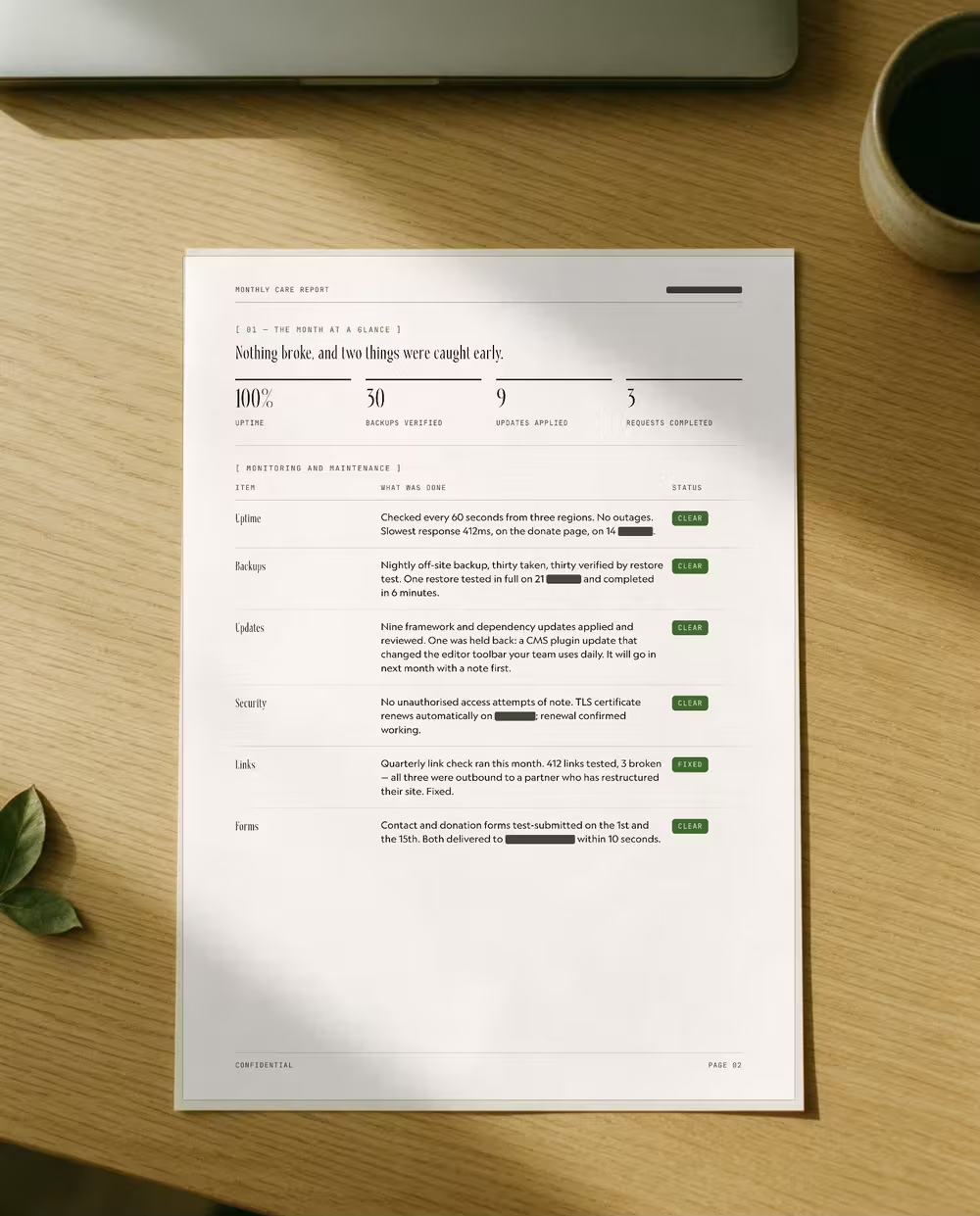
You stop being the single point of failure. I hold the technical detail, the documentation and the accountability, and I tell you what needs attention before it becomes a problem.
Accessible to everyone, by default.
WebAIM's 2026 study found 95.9 percent of the web's top million home pages fail basic accessibility checks. Yours will not be one of them. For an NGO, WCAG AA is the mission enacted, and I build and monitor to it as routine work.
Compliance, already answered.
Charity Commission disclosures, privacy, consent and governance documents present, current and findable. When a funder or regulator checks, the answer is already on the site.
A team that publishes without waiting.
Text, posts, team changes and new pages handled in house, in minutes. The structure protects the site from mistakes, so your team works independently and safely.
Campaigns live in days.
Appeals, annual reports and programme launches built to institutional standard on a 2–4 working day rhythm, not a project timeline.
One person, directly accountable.
No account manager, no ticket queue, no handoffs. You brief me, I build it, and when something breaks you message the person who can actually fix it.
Frequently Asked Questions
The answers you're looking for.
Common concerns I hear from Communications Directors and Executive Leadership about investing in institutional website infrastructure.
How do we start?
Every engagement begins with a Blueprint Audit: a governance diagnostic that maps your stakeholders, audits your accessibility and credibility, and produces a Board-ready roadmap. It is £2,500 and stands alone, with no obligation to proceed.
What are the build options?
Two, both scoped from your Blueprint Audit. The Monthly Partnership is ongoing Webflow work with the build included as the first phase. Implementation is a fixed-scope Webflow project delivered on a fixed timeline and price.
Can I use the subscription for a full website build?
Yes. Through the Monthly Partnership, your new site is built as the first phase, with no separate project fee, then the partnership continues. If you need a defined project with a fixed scope and timeline instead, that is Implementation, scoped and quoted separately.
Does our site need to be on Webflow?
Yes. I build on Webflow, using the Lumos framework, because it gives your team genuine independence and a strong accessibility and performance foundation. If you are moving from WordPress or Wix, the migration is part of the work.
Is there a minimum commitment?
The Monthly Partnership is rolling, with 30 days' notice to pause or cancel and no penalty. Implementation is a fixed-scope project, agreed in writing before work begins.
Do we own our website?
Completely, on every route. The site, content, and all assets are yours, with a clean handover of documentation and credentials.
Who does the work?
I do, personally. One specialist who read your brief, from diagnosis to delivery. No account managers, no handoffs, no junior team learning on your project.
Is my organisation the right fit?
I work with established NGOs and nonprofits, typically with £500k to £10m in annual income, during periods of scrutiny, growth, or public accountability. If your website no longer reflects the organisation behind it, we should talk.
Anyone can build a website with AI now. Why does this cost what it costs?
Because the build was never the expensive part. The 2025 Charity Digital Skills Report found 76 percent of charities now use AI tools, up from 61 percent the year before. The tools are shared. What you are buying is accountability: someone who knows your organisation, answers when something breaks, keeps the site compliant as guidance moves, and carries the technical risk so your team does not.
What happens when something breaks?
You message me directly, with a screenshot and a sentence. No ticket number, no triage call. Small fixes are usually live the same or next working day, and you hear from me the moment it is resolved.
You work alone. What happens if you are unavailable?
A fair question, and one I would ask in your position. Your site runs on a mainstream platform with thousands of qualified professionals behind it, not on a stack only I understand. Hosting, uptime and backups are platform level, not dependent on my presence. Everything is documented, every credential is yours, and a clean handover exists from day one. Planned absences are flagged in advance. If I disappeared tomorrow, your organisation would face an inconvenience, not a crisis.
This thinking starts with the Blueprint Audit.
A £2,500 governance diagnostic that identifies what's actually failing, maps your stakeholder landscape, and delivers a Board-ready roadmap, in 2–3 weeks. It stands alone. No obligation to continue.