






Territorio de Zaguates International Fundraising Infrastructure
How a Webflow rebuild addressed international fundraising complexity for Costa Rica's largest dog sanctuary, where operational scale demanded institutional digital infrastructure.
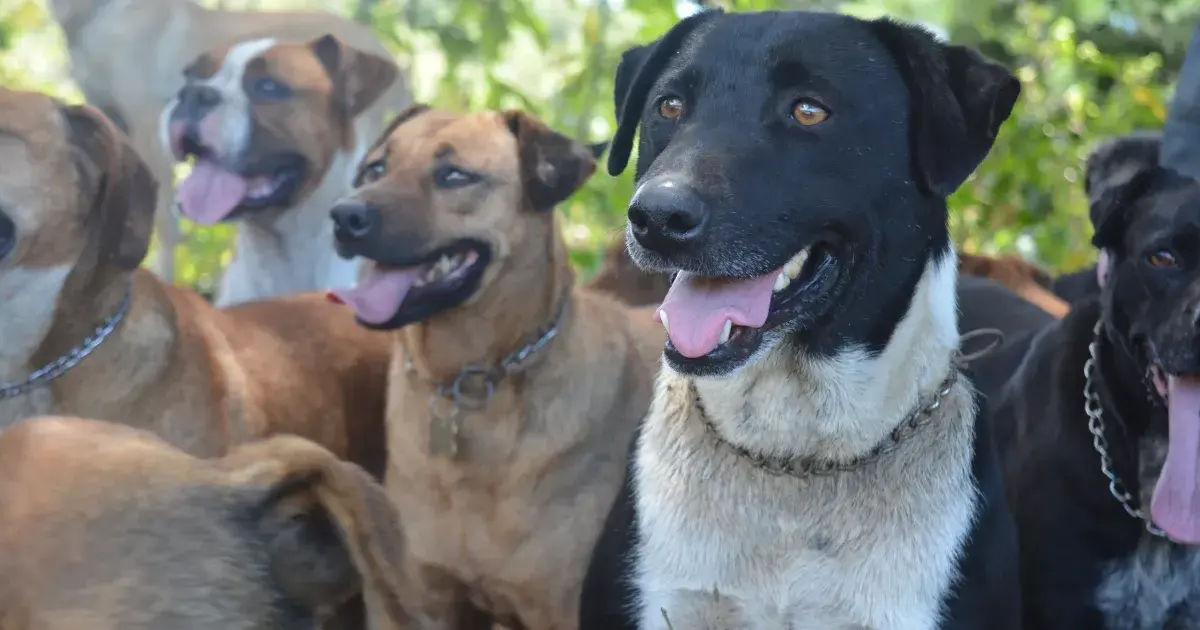
Running a sanctuary for more than 1,800 rescued dogs across 400 acres in Costa Rica takes more than local support. It takes fundraising infrastructure that works across borders, and it takes that infrastructure to run without drawing people away from the animals.
Overview
- Organisation: Territorio de Zaguates (Land of the Strays, Costa Rica)
- Challenge: International fundraising at institutional scale, while the IT expertise available was needed on sanctuary operations
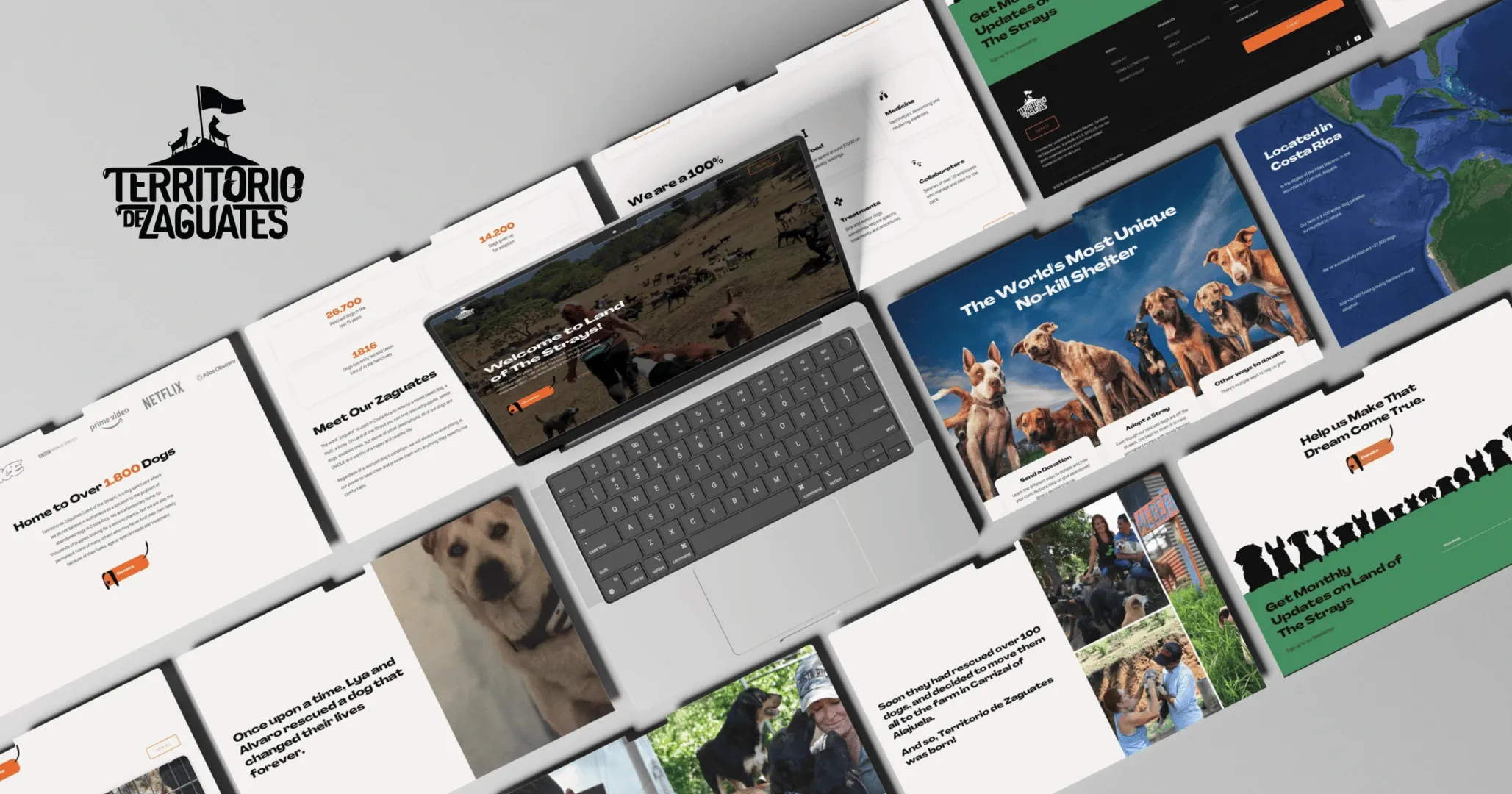
- Approach: a new Webflow project, built to a fresh design, treating the website as cross-border donor infrastructure rather than a marketing asset
- Outcome: Clearer international donation pathways, content the team updates itself, and a site sized for the scale the sanctuary actually runs at
The Institutional Challenge
Territorio de Zaguates operates at a scale that changes what the website is for. Permanent sanctuary for the more than 1,800 dogs currently fed and cared for on a 400-acre site (territoriodezaguates.com, 2026) is not rescue and rehoming with a donate button attached. It is institutional animal welfare with a running cost that does not end, funded substantially from outside the country the work happens in.
Daniel, who manages IT operations for the sanctuary, faced an ordinary constraint. The technology that keeps the place running (veterinary systems, facility management, day to day coordination) already took the expertise available. Web infrastructure sat outside that, and international fundraising depended on it entirely. He had neither the time nor the experience to build it himself alongside the systems he already looks after, which is how the work came to me.
The challenge went past technical execution:
- International fundraising: a Costa Rican organisation accepting donations from supporters in the US, Europe and Latin America
- Currency and payment infrastructure: donation processing built for a global supporter base rather than a domestic one
- Communicating operational scale: conveying sanctuary capacity, and the permanent care model behind it, well enough to justify ongoing support
- Donor transparency: supporters funding work in another country need to see plainly what they are funding
What was actually at stake:
- Funding sustainability. Could international donors understand the scale and commit to ongoing support?
- Operational credibility. Did the digital presence match the institutional capacity behind it?
- Payment resilience. Was donation processing adequate for multi-currency, cross-border giving?
- Resource allocation. Could IT stay on sanctuary operations rather than website management?
The Strategic Approach
I treated the website as fundraising infrastructure, not a marketing asset. For an organisation whose costs recur permanently and whose money arrives from abroad, the site is the operational surface the funding runs through. That is the same argument I make more generally about an NGO website being a governance problem rather than a design problem, and this engagement is a clear case of it.
Critical decisions:
- Donor pathway architecture: an information structure that answers what a supporter in another jurisdiction asks first. Why permanent sanctuary? How are funds used? What is the operational model?
- Multi-currency donation infrastructure: payment processing that accommodates an international supporter base
- Communicating scale, visually and structurally: making the size of the commitment legible, because the size of the commitment is the case for funding it
- Mobile first, on ordinary devices and connections: supporters arrive from different countries on different hardware at different speeds
A permanent care model is paid for by people who give more than once, so the pathway had to hold up for a supporter returning to give again, not only for a first gift. The second gift is a different journey from the first, and for a sanctuary it is the one that keeps the gates open.
Imagery does much of the persuading on a site like this, and it is also the heaviest thing on any page it sits on. How a nonprofit chooses, describes and optimises its photographs is a governance question as much as an editorial one, particularly where the audience is international and the connection is not always good.
Multilingual delivery is recorded among the services on this engagement. The site publishes in English, with Spanish and German versions alongside it, and keeping a multilingual site current is a governance problem rather than a translation one: somebody has to own each language after launch.
The work needed an understanding of:
- Costa Rican NGO operational context
- International animal welfare fundraising
- Cross-border payment processing requirements
- How to communicate institutional scale without turning it into a plea
The Organisational Outcome
What is in place now:
- International donation pathways with the currency, payment and geographic friction reduced
- An account of the permanent sanctuary model a supporter can follow without prior knowledge of the organisation
- A digital presence that matches the institutional capacity behind it
- Content updates the team makes internally, so programme communication does not queue behind me
- IT attention back on sanctuary operations rather than website management
The sanctuary retains me for ongoing stewardship: not maintenance in the traditional sense, but continued work on the site as international fundraising requirements change and the infrastructure has to change with them.
One thing to be plain about: this is a record of the work, not of a result. I have no figure from the payment provider, no measure of how the share of donations arriving from outside Costa Rica moved, and nothing attributable from the sanctuary about what changed afterwards. Everything above is what was built and what the team can now do with it. Read the absence of numbers as exactly that, rather than as modesty about numbers I am holding back.
A second thing to be plain about. The accessibility work on this engagement was page structure and metadata: correct semantic markup, headings that describe the page rather than style it, and the alt text and page-level information a screen reader and a search engine both depend on. It was not a tested conformance assessment, and this page makes no claim about a conformance level.
Why This Matters
Animal welfare organisations are usually advised to treat a website as an awareness tool. At institutional scale, and particularly where permanent care is funded from abroad, it is closer to operational infrastructure: the thing the money arrives through, and the thing that has to keep making the case between appeals.
Territorio de Zaguates needed more than compelling storytelling:
- Cross-border reality. Costa Rican operations plus international donors is jurisdictional complexity, not a detail.
- Payment resilience. Multi-currency processing without technical friction in the way of a gift.
- Institutional credibility. A digital presence that can support an ongoing ask at this scale.
- Operational independence. IT focused on sanctuary needs, not website management.
For an organisation that depends on funding from other countries and cannot spare its technical people for the website, that distinction decides what the site is built to do.
If that describes your position, book a call and I will look at it with you.