




Do Good Daniels Foundation Digital Infrastructure
How a Webflow migration lifted the platform limits that were holding back programme expansion and donor confidence at a growing 501(c)(3) foundation.
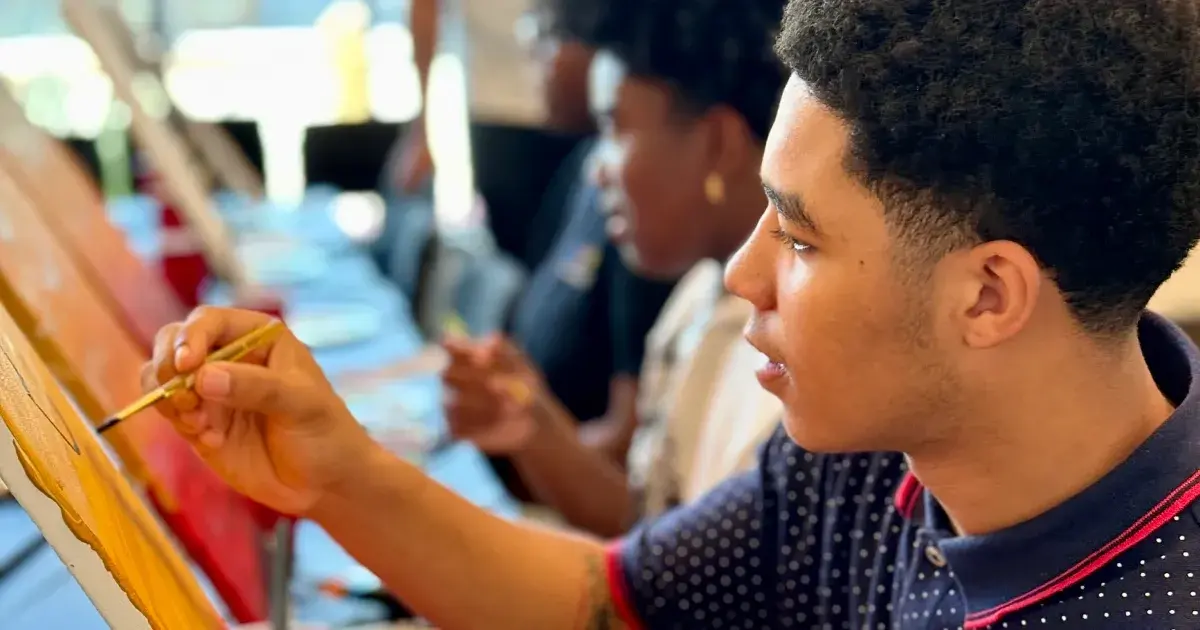
Do Good Daniels Family Foundation is a US 501(c)(3) working with young people and families. In its own words, it exists to "empower youth and families to Be Good. Do Good. Spread Good." (dogooddaniels.org, 2026).
As the programmes grew, the website stopped being a presentation question and became an operating one. The platform set the limit on what the foundation could publish, and on how quickly. This is a record of what the move to Webflow changed.
Overview
- Organisation: Do Good Daniels Family Foundation (youth empowerment and family support, US 501(c)(3))
- Challenge: the Wix site had become an operational constraint as foundation programmes expanded
- Approach: a migration to Webflow, with donation processing built in rather than bolted on
- Outcome: programme content the foundation's own team maintains, and a platform that no longer sets the ceiling on what it can publish
The Institutional Challenge
Do Good Daniels delivers education, housing and mentorship programmes for young people and families. As those programmes expanded, Christi, the foundation's co-founder and CEO, reached a view about the website: it had become a constraint on the work rather than a support for it.
That is a governance problem, not a design problem, and the distinction decides the fix. A design problem is solved once. A governance problem is ongoing, which is why organisations that treat it as cosmetic end up rebuilding every few years without the underlying issue ever being addressed.
What the foundation was actually up against:
- Public-record scrutiny. A 501(c)(3) annual return is a public document: the IRS requires an exempt organisation to make its Form 990 available for public inspection (IRS, Public Disclosure and Availability of Exempt Organizations Returns). A donor doing their own checking finds the filing and the website in the same sitting and reads them together. What they look for when they do is specific and largely predictable.
- Programme growth. The platform could not accommodate the expanding education, housing and mentorship initiatives.
- Donation processing. Payment handling was not set up for a growing donor base.
- Operational scalability. The platform was constraining the foundation's development rather than enabling it.
The site they were working with was a DIY Wix build, and its problems were as much interface as infrastructure: how it was put together made it awkward to use and awkward to read. Christi found me through the Webflow marketplace, and we talked before she decided to go ahead.
What was at stake behind each of those:
- Donor confidence. Did the site communicate the operational capability of a foundation at this stage of growth?
- Programme visibility. Could expanding initiatives be presented with institutional clarity?
- Funding infrastructure. Was payment processing adequate to the growth the foundation was planning for?
- Operational efficiency. Was the platform helping or hindering programme expansion?
The Strategic Approach
The brief was a migration. I treated it as infrastructure work rather than a cosmetic upgrade, because a migration is a governance project before it is a technical one: what you carry across, what you retire and who owns the result all matter more than what the new pages look like.
The decisions that shaped it:
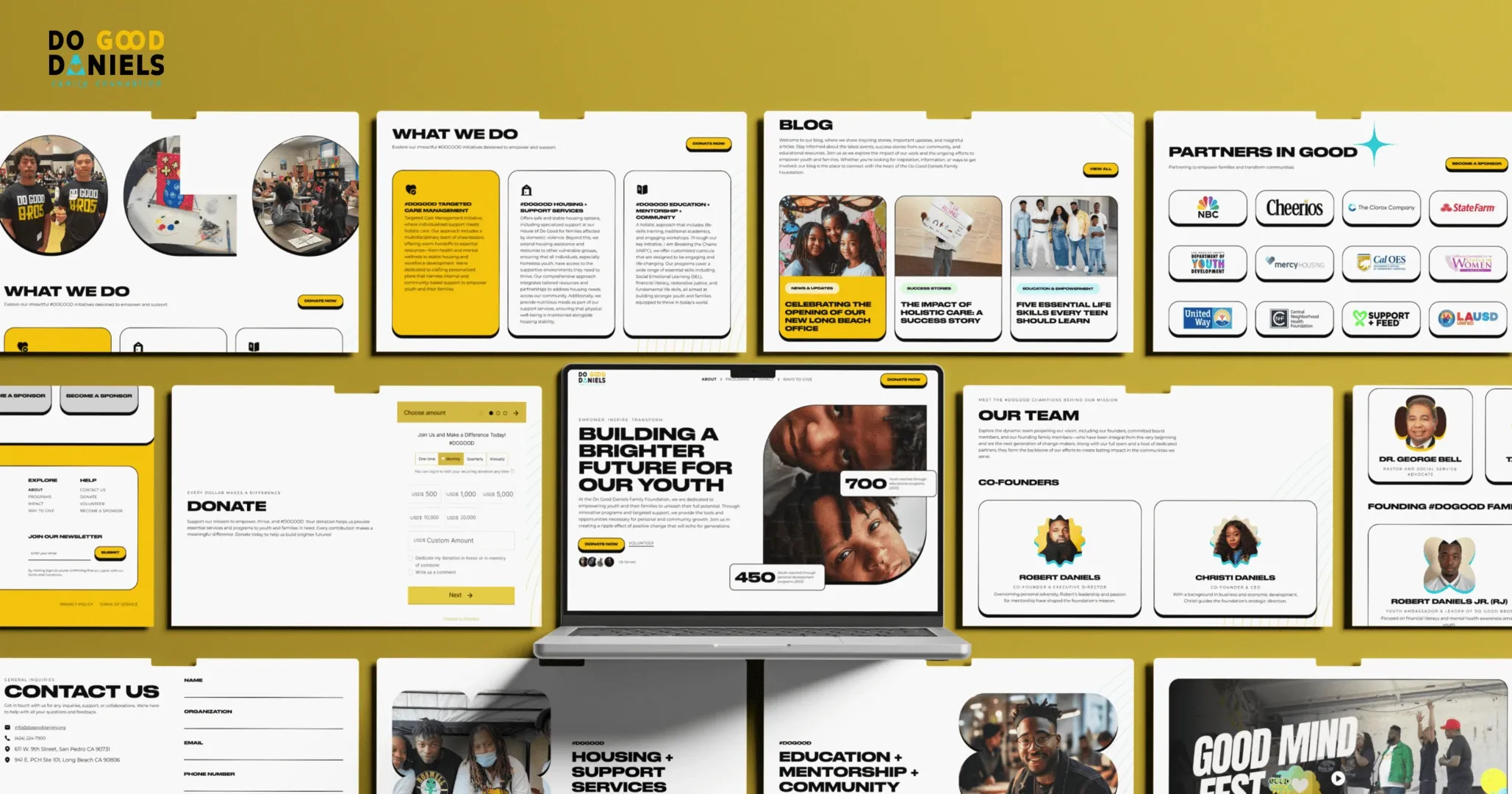
- Programme-centric architecture. Education, housing and mentorship each given their own place, presented with institutional clarity.
- Donation processing built in. Donorbox and Stripe, so the payment path can carry a larger and more varied donor base.
- 501(c)(3) positioning. An information architecture that answers donor due diligence questions rather than leaving the visitor to go looking. Foundations carry a particular version of this problem: they have to be transparent about how they work without inviting people to game it.
- Editing the foundation's team can actually do. Content management built around the updates the team makes, not around a developer's model of the data. A CMS built by a developer is usually built for a developer.
- Working across devices. Programme participants, donors and community partners arrive on very different hardware, and the layout has to hold at each size.
One thing to be plain about, because it is listed among the services on this engagement. The accessibility work here was page structure and metadata: correct semantic markup, headings that describe the page rather than style it, and the alt text and page-level information a screen reader and a search engine both depend on. It was not a tested conformance assessment, and this page makes no claim about a conformance level.
The work required understanding:
- 501(c)(3) operational context and donor expectations
- how foundations communicate programme impact to several stakeholder groups at once
- payment infrastructure requirements for varied funding sources
- what the foundation would need the site to absorb as programmes expanded
The Organisational Outcome
Described as what was built and what the foundation now does, rather than as results I cannot evidence:
- The programmes are presented clearly: education, housing and mentorship each have their own place on the site.
- Donation processing runs through Donorbox and Stripe.
- The foundation's team updates programme content itself, without coming back to me for routine changes.
- The site holds up across the range of devices its different audiences use.
- The foundation has come back for further work on the same site since launch.
I have no donation figures to publish for this engagement, so there are none on this page. The one thing I have noticed since the move from Wix to Webflow is that search impressions went up. That is my own observation of the site, not a measured result, and I am not going to present it as one.
What the Foundation Can Do Without Me
The part of this engagement that matters most to the foundation is the least visible one: the people who work there can change the site. Programme copy, new initiatives and updates go up when the foundation is ready, not when I am.
That is the real test of a handover. An engagement that leaves the organisation dependent on whoever built the site has not actually finished, however good the site looks on launch day.
The foundation received all of it at handover: documentation, the credentials, editorial training and a maintenance protocol. One qualification, because the claim above depends on it being stated plainly: I still have access to the project through my Webflow workspace. The foundation does not need me in order to publish, but this is not a clean total handover either, and it would be wrong to describe it as one.
Why This Matters
Foundations outgrow their first website. The platform that was right at launch becomes the thing setting the pace a few years later, and the symptoms read as cosmetic long before anyone names the cause.
For a 501(c)(3), it is not cosmetic. The annual return is public, the website is public, and a prospective donor reads both. So the question a growing foundation should be asking is not whether the site looks current, but whether it can carry the next programme without a rebuild.
Do Good Daniels needed a migration that treated the website as operating infrastructure:
- Growth. The platform supports programme expansion instead of capping it.
- Donor confidence. The site stands up to the checking a donor does on their own.
- Payment resilience. Donation processing that grows with the foundation.
- Operational efficiency. Content capability that keeps pace with programme development.
The follow-on work is the part I would point to. It has not been a run of separate projects: it is further work on the same site, and none of it major. That is the shape I would want it to have. A one-off deployment ends at launch, and infrastructure needs keep arriving as programmes expand.
If your foundation has outgrown its platform, and the constraint is showing up in what you can publish rather than in how the site looks, that is the conversation worth having. Bring the list of things you currently cannot do.
Client perspective
Eric from Socialectric isn't just a web designer; he's a visionary partner who instantly became my new best friend!
He has an incredible knack for grasping your vision and translating it into something tangible and spectacular. From day one, the process was seamless, organized, and utterly professional. My website not only looks fantastic, but it also perfectly reflects our mission, thanks to his meticulous attention to detail and proactive communication. No follow-ups needed; Eric kept me in the loop every step of the way. He's already lined up for three more projects because, frankly, I can't imagine working with anyone else. Eric embodies professionalism, creativity, effective communication, and reasonable pricing. Truly lucky to have Socialectric on our side!